 EpoxyGrind
Best picks
Best Interlocking Garage Floor Tiles (2026)
No grinding, no cure time, no mixing chemicals — tiles are the fastest garage floor upgrade, at the cost of a seam pattern epoxy doesn't have.
Interlocking tiles snap together over your existing concrete with no grinding, priming, or cure time — you can finish a garage in an afternoon. The tradeoff versus epoxy is a visible seam/grid pattern and a floor that sits slightly proud of the slab (which matters for door clearance in some garages). See our epoxy vs. tiles comparison for the full tradeoff.
| Product | Size | Thickness | Warranty | Price |
|---|---|---|---|---|
| Swisstrax Ribtrax PRO Interlocking Garage Floor Tile | 15.75in × 15.75in | 0.75in | Limited lifetime (residential) | $8.58/tile ($4.99/sq ft) |
| RaceDeck Free-Flow Interlocking Garage Floor Tile | 12in × 12in | 0.5in | See retailer | $3.99/tile |
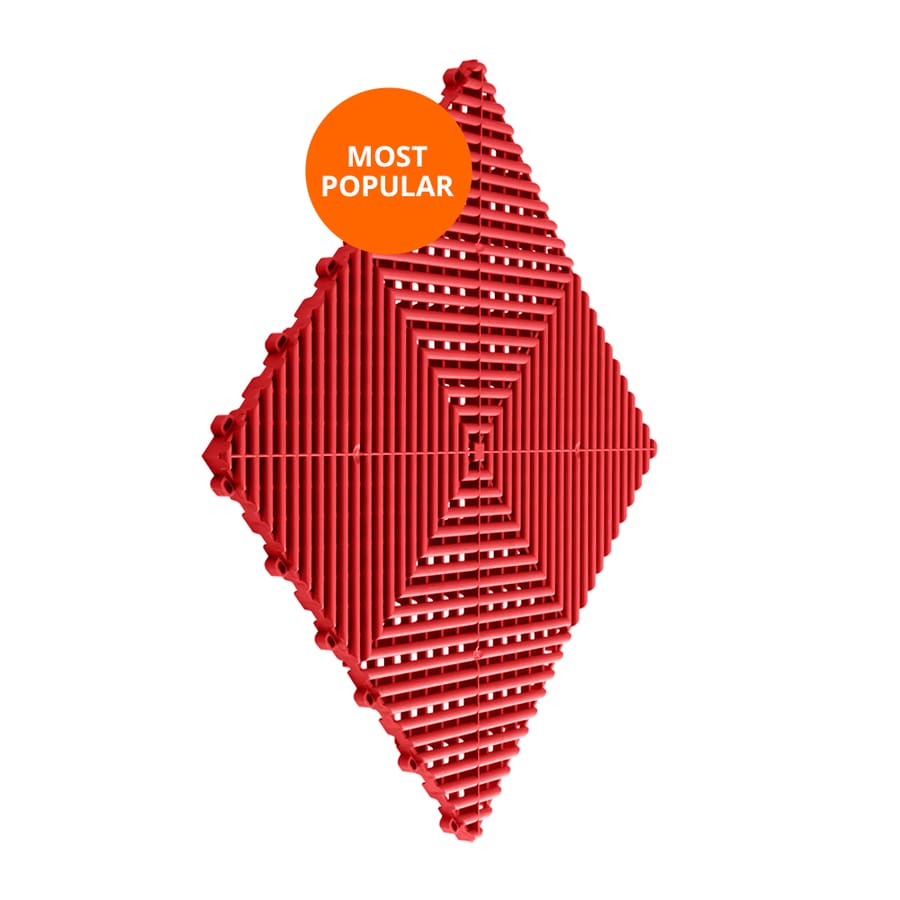
Swisstrax Ribtrax PRO Interlocking Garage Floor Tile
Swisstrax
$8.58/tile ($4.99/sq ft)as of 2026-07-03
A limited lifetime warranty and a rollover rating that outclasses most home-garage duty cycles by a wide margin.
Ribtrax PRO is Swisstrax's premium tile — thicker than most competitors at 0.75in, rated to 70,000 lbs of rollover weight, and backed by a limited lifetime warranty for residential use. It costs noticeably more per square foot than a budget tile, but for a floor you're installing once and expect to last, the thickness difference is real underfoot, not just a spec sheet number.
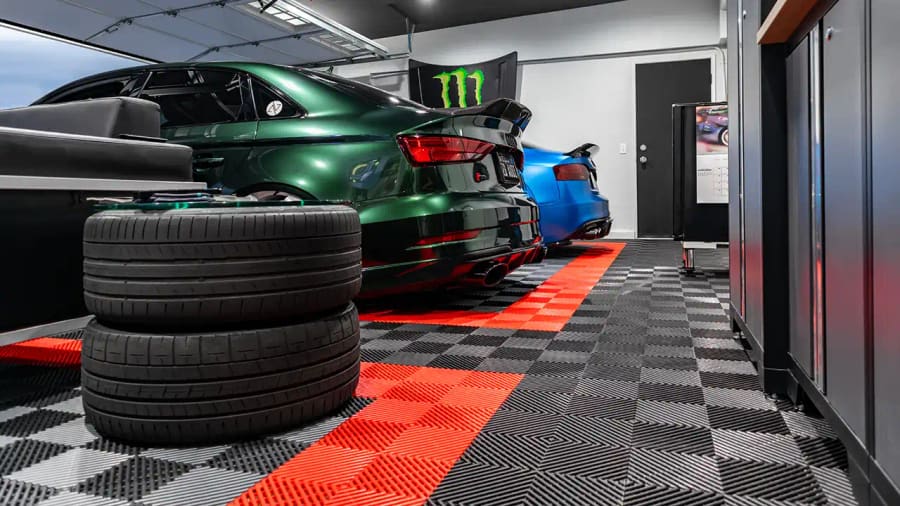
RaceDeck Free-Flow Interlocking Garage Floor Tile
RaceDeck
$3.99/tileas of 2026-07-03
A fraction of the price per tile, with a self-draining vented design that's useful if you track in snow or rain.
RaceDeck's Free-Flow tile is thinner and noticeably cheaper per tile than the Swisstrax pick above, with a vented, self-draining surface that lets water and small debris fall through rather than pool on top — useful if your garage regularly sees wet tires or snow melt. The tradeoff is less thickness underfoot and a lower stated rollover capacity than the premium option.
How we evaluate
We weigh tile thickness (durability and underfoot feel under vehicle weight), warranty terms, and price per square foot once you account for a full garage's worth of tiles, not just the per-tile sticker price. Specs above are pulled from the manufacturer/retailer listings linked at the verified date shown; we have not independently bench-tested rollover weight or warranty claims.
Rather have a pro do it?
Upload a photo and get a priced estimate in seconds — no obligation.
FAQ
Do I need to prep the concrete before installing tiles?
Much less than for epoxy — tiles don't need grinding or a moisture test the way a coating does, though a clean, reasonably flat slab still installs more easily and looks better once done.
Will garage floor tiles affect my garage door clearance?
Possibly — tiles add some height (roughly 0.5-0.75in depending on the product), which can matter if your garage door track or a car's ground clearance is already tight. Measure before you buy.
Can I remove tiles later and coat the floor with epoxy instead?
Yes, and this is one of tiles' real advantages — they're fully reversible, unlike a cured epoxy coating. If you're not sure which look you want long-term, tiles are the lower-commitment option.
Do interlocking tiles work well in a cold climate garage?
Most quality tiles are rated for a wide temperature range and handle freeze-thaw cycles without issue, but check the specific product's temperature rating if you're in a climate with extreme cold.